BEM’s audit of ACEM’s assessment process provides a useful view of the operational disciplines needed to maintain a credible pathway to professional registration.
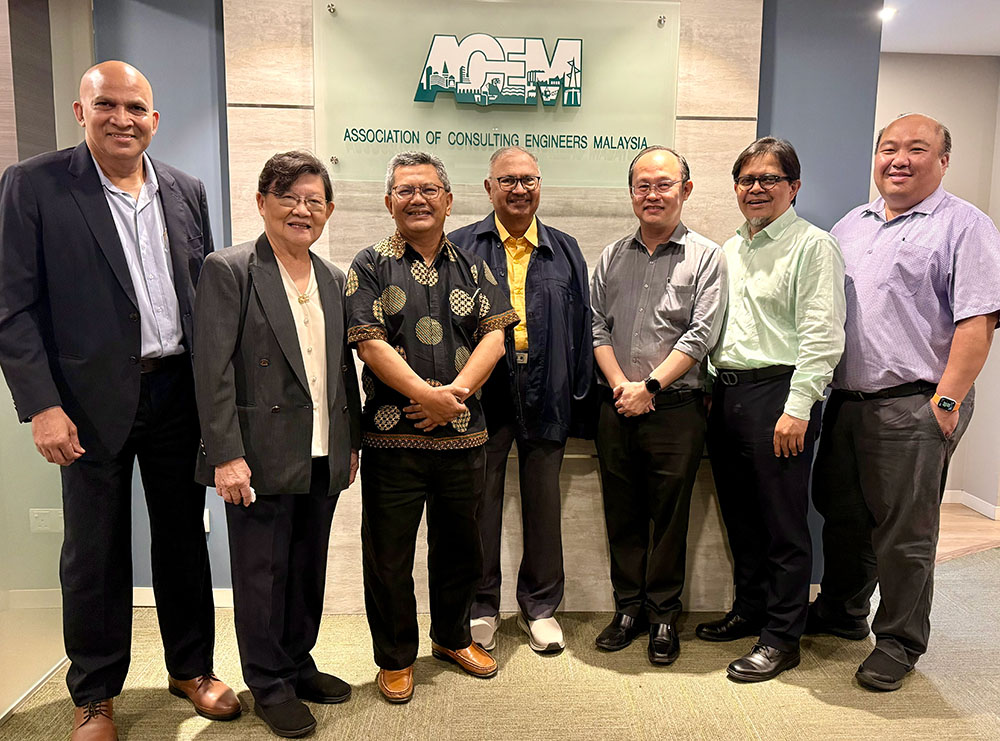
On 10 August 2026, the Association of Consulting Engineers Malaysia (ACEM) received a delegation from the Board of Engineers Malaysia (BEM) at ACEM headquarters for an audit of ACEM’s administration of the Professional Assessment Examination (PAE). The engagement formed part of BEM’s oversight of its appointed examination service providers and provided a structured opportunity to examine the consistency, efficiency and integrity of the assessment process.
The BEM delegation comprised Prof. Dr. Ir. A. Aziz, Prof. Emeritus Dr. Ir. K. S. Kannan and Ir. Madeline Tan. ACEM was represented by Ir. Arul Hisham Abdul Rahim, Chair of the Professional Assessment Committee; Ir. Foo Kam Fai, Past Chair; Ir. Ahmad Rashidi Zainuddin, Committee Member; and Ir. Chong Chew Fan, Past Committee Member.
A growing assessment responsibility
ACEM has served as a BEM-appointed PAE service provider since 2023. According to the figures presented for the audit, ACEM assessed 848 candidates over the ensuing three-year period, with an overall pass rate of approximately 85 per cent. The volume demonstrates the importance of reliable administrative controls: candidate records must be complete, examiners must be appropriately matched by discipline, and each assessment cycle must be conducted consistently and on schedule.
The audit discussion identified three recurring operational constraints. First, incomplete submissions and uneven candidate preparation can delay an assessment before the professional discussion begins. Second, the pool of available examiners is limited in some specialised disciplines, including chemical and electronic engineering. Third, experienced examiners contribute significant professional time, making succession and retention important to the long-term resilience of the system.
Areas for continuous improvement
These constraints point to several practical areas for continuing improvement. Clearer pre-assessment guidance and an early completeness check can reduce avoidable rework. A discipline-based examiner database, supported by succession planning and calibrated briefing materials, can improve matching and consistency. More predictable scheduling and appropriate recognition of examiners’ professional contribution can also help sustain the volunteer pool.
The audit did not merely review compliance at a point in time. It reinforced the shared responsibility of BEM and its service providers to maintain a process that is fair to candidates, workable for examiners and trusted by the profession. ACEM welcomes BEM’s guidance and will continue supporting a rigorous assessment pathway that protects the standing of professional engineering practice in Malaysia.