Contractors’ All Risks insurance is an important financial control, but effective flood resilience begins with the project’s engineering and site-management measures—and with careful reading of the actual policy.
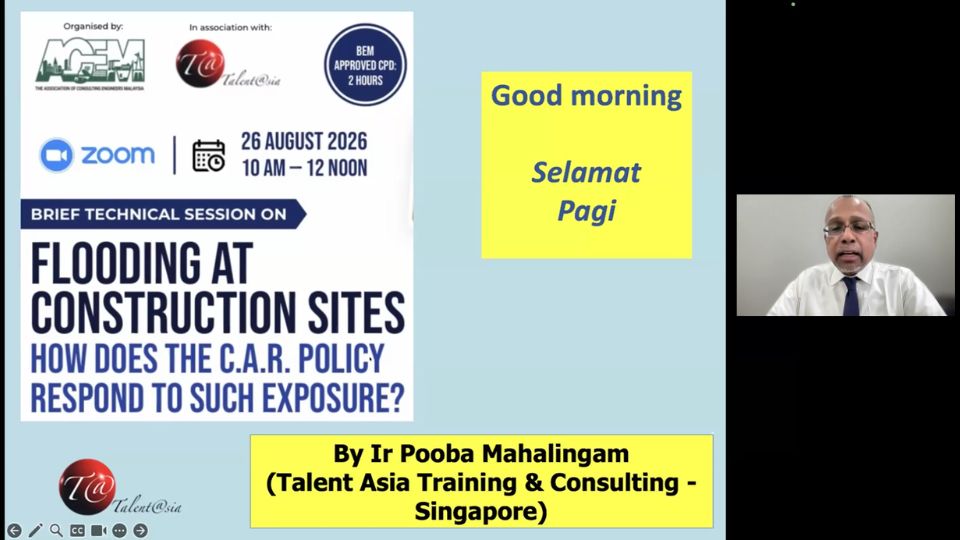
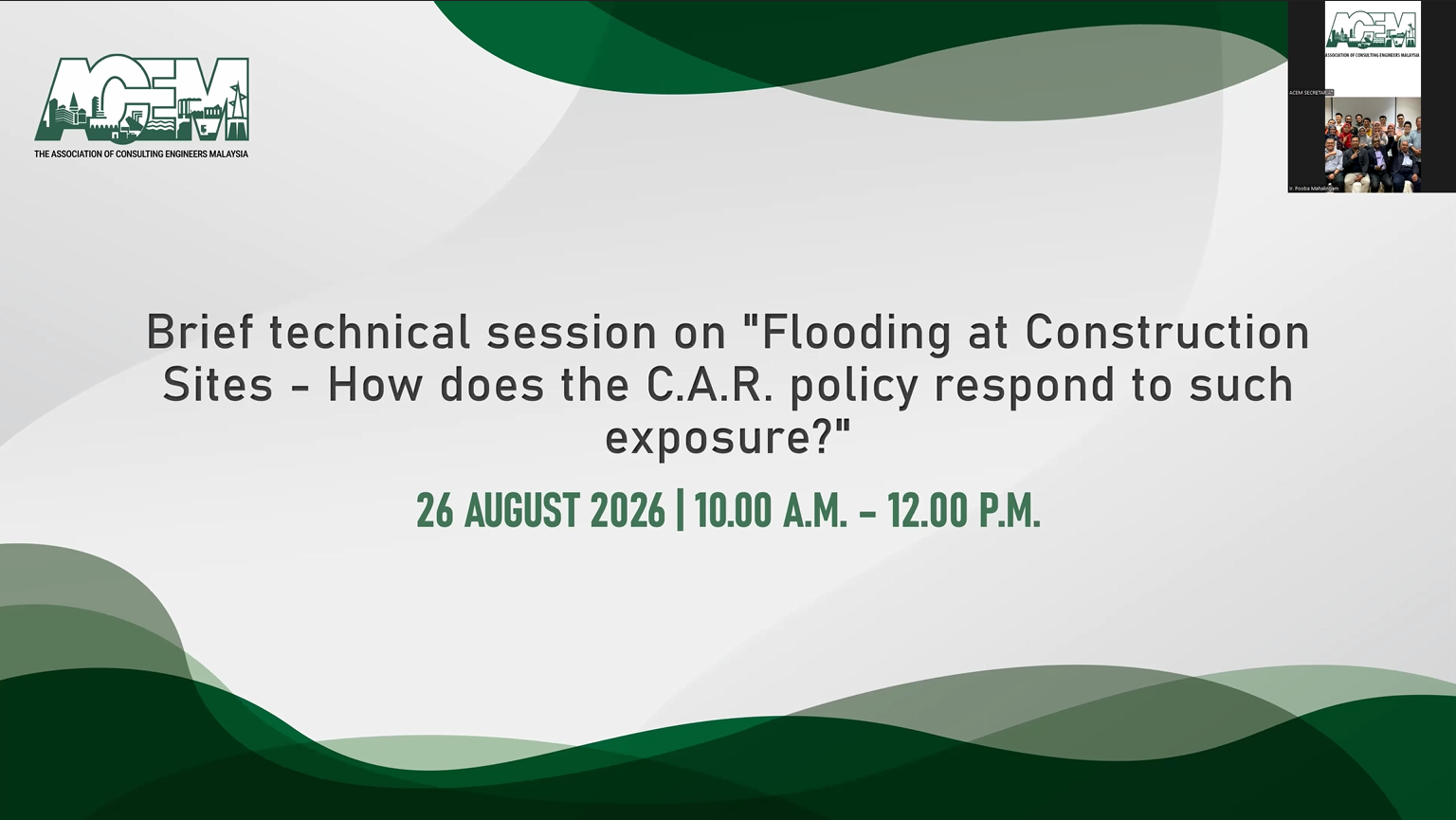
ACEM, in association with Talent Asia Training and Consulting, Singapore, conducted a technical session on flooding at construction sites and the response of Contractors’ All Risks (C.A.R.) insurance. The session was delivered by Ir. Pooba Mahalingam, a regional risk consultant and professional engineer with extensive experience in engineering insurance and risk management.
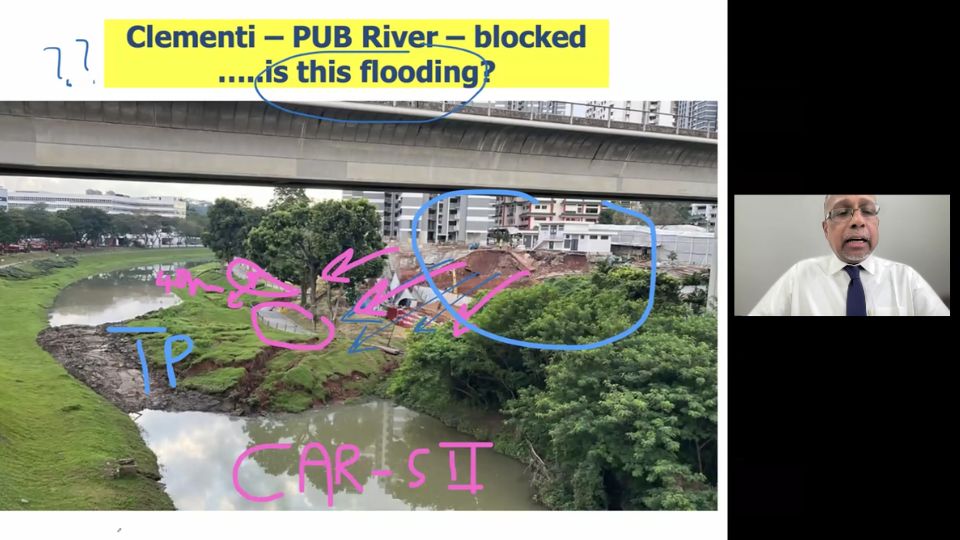
Flooding can damage permanent works, temporary works, stored materials, equipment and access routes, while also interrupting the construction sequence. The exposure is shaped by site levels, temporary drainage, upstream catchment conditions, nearby waterways, tidal effects, seasonal rainfall and the stage of construction. An open excavation or partially completed basement, for example, can have a materially different risk profile from the same asset after the permanent drainage and waterproofing systems are operational.
“All risks” does not mean every loss
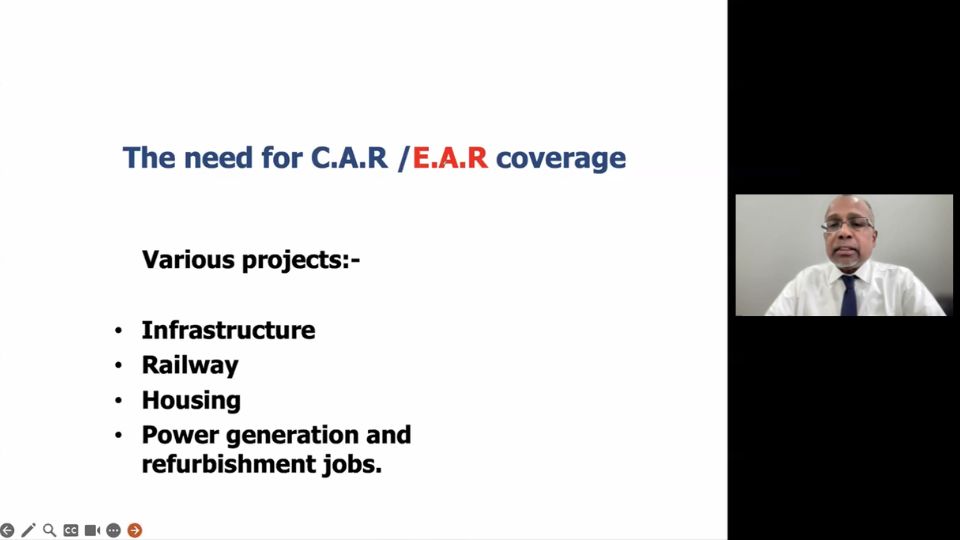
A C.A.R. policy commonly provides cover for sudden and unforeseen physical loss or damage to insured contract works, subject to its wording. Flood may fall within the insured perils, but cover can be affected by exclusions, endorsements, sub-limits, deductibles, special conditions and the insured’s compliance with risk-control or notification requirements. The policy schedule and endorsements therefore govern; the label “all risks” should not be read in isolation.
Construction plant and machinery may require a separate policy or specifically defined cover. Financial loss caused only by delay is generally not insured under the material-damage section of a standard C.A.R. policy. Where delay exposure is material, project parties may consider delay-in-start-up or advance-loss-of-profits cover, subject again to underwriting, causation requirements and policy terms.
Engineering controls remain the first line of defence
- Maintain temporary drainage, diversion and pumping arrangements for the current construction stage, including backup power and safe discharge routes.
- Monitor weather and upstream conditions, define trigger levels and assign authority for shutdown, evacuation and protection actions.
- Store materials, fuel, electrical equipment and records above credible inundation levels, and secure items that may float or obstruct drainage.
- Inspect temporary works and excavations after heavy rainfall, and retain photographs, maintenance logs and incident records.
- Align the method statements, emergency plan, contract risk register and insurance conditions so that responsibilities are understood before an event.
The session’s practical message is that insurance and engineering risk management are complementary. Project teams should review cover with their broker or insurer and obtain project-specific legal or insurance advice where necessary; coverage can only be determined from the policy and the facts of a particular loss.